

Sourcing teams tend to default to whichever country they used last time, mostly because switching feels riskier than it probably should. But the three biggest options for yarn sourcing in Asia- Bangladesh, India, and Vietnam- aren’t interchangeable. Each one has a different cost structure, production strength, and set of trade-offs depending on what you’re actually ordering.
Here’s an honest comparison of the three, not a sales pitch for one over the others, followed by where Bangladesh specifically makes the most sense.
Cost and Labor
Bangladesh has historically had one of the lowest labour costs in the region, which shows up directly in yarn pricing, especially for cotton and cotton-blend basics produced at volume. India sits a bit higher on the labor-cost scale, but it partly offsets that with a much larger, more vertically integrated domestic textile industry, meaning fewer middlemen between raw cotton and finished yarn in many cases. Vietnam’s labour costs have climbed faster than those of the other two over the past decade, partly because its broader manufacturing boom has pulled workers into higher-paying sectors, narrowing its price advantage in yarn specifically, while it’s still highly competitive in garment manufacturing.
Raw Material Access
India produces a significant share of its cotton domestically, giving Indian mills more direct access to raw fiber and less exposure to import costs and shipping delays. Bangladesh, by contrast, imports the large majority of its raw cotton, mostly from India, the US, and parts of Africa, which adds a dependency that shows up in pricing when global cotton markets move. Vietnam is in a similar position to Bangladesh here, importing most of its raw cotton rather than growing it domestically, and its yarn industry leans more heavily on synthetic and blended fibers as a result, particularly polyester and viscose.
Manufacturing Scale and Specialisation
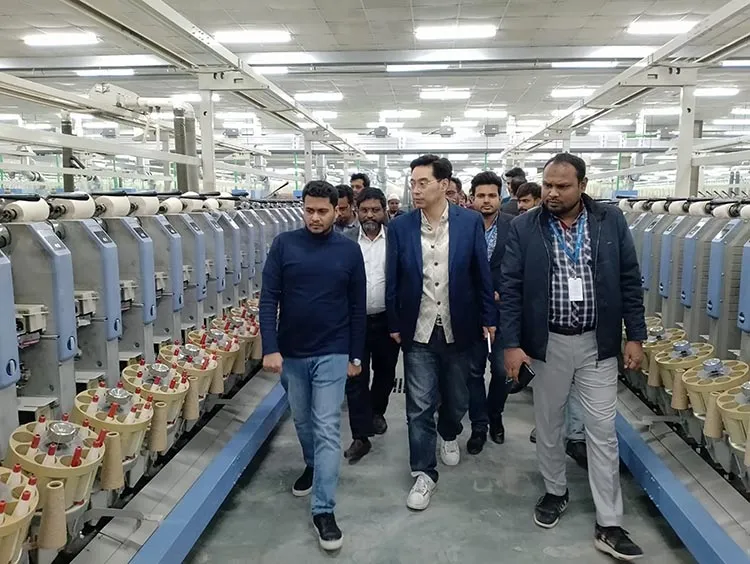
Bangladesh has built one of the most concentrated cotton and melange yarn-spinning bases in the world, largely to supply its enormous garment export industry. That concentration means mills there are often highly specialised in exactly the kind of cotton and blended yarn that feeds basic knitwear and casual apparel, the categories most buyers are actually sourcing at volume.
India’s yarn industry is broader and more varied, spanning cotton, wool, and speciality and technical yarns, reflecting its much larger and more diversified domestic textile base. That breadth is an advantage if you need something unusual, but it also means less of a singular focus on any one category than in Bangladesh’s cotton and melange specialisation.
Vietnam’s textile industry has grown fastest in garment and apparel manufacturing rather than in yarn spinning specifically, and a meaningful share of the yarn used in Vietnamese garment production is still imported from elsewhere in the region, including Bangladesh and China.
Lead Times and Logistics
Lead times depend as much on port infrastructure and shipping routes as on production capacity itself. Bangladesh’s major garment and textile hubs are close to Chittagong port, which helps keep export logistics relatively efficient for a country still developing its broader infrastructure. India’s larger geographic size means lead times can vary more by region, since not every textile cluster has equally strong port access. Vietnam benefits from strong port infrastructure concentrated around a smaller geographic footprint, which tends to keep its logistics fairly consistent, though its yarn import dependency adds a step that pure yarn-producing countries don’t have to deal with.
Where OTEXA Data Fits Into This
If you’re sourcing yarn or textiles specifically for the US market, OTEXA, the Office of Textiles and Apparel under the US Department of Commerce, publishes trade data and country-specific import statistics that are worth checking directly rather than relying on general industry reputation. Actual trade volumes and category breakdowns tend to tell a more up-to-date story than country comparisons, which don’t get updated as sourcing patterns shift.
Best Country to Source Yarn: It Depends on What You’re Making
For cotton basics, casual knitwear, and melange yarn at volume, Bangladesh tends to offer the strongest combination of cost, specialisation, and export infrastructure tailored to that category. For speciality yarns, wool, technical fibres, or anything outside standard cotton and blends, India’s broader industry base is worth a closer look. For buyers whose sourcing is already anchored in Vietnam for garment manufacturing and who want to keep yarn and cutting-and-sewing in the same regional supply chain, Vietnam can make logistical sense even without being the outright cheapest yarn producer.
There isn’t a single right answer across all three. There’s a right answer for a specific product, volume, and delivery timeline, and it changes depending on what’s actually being ordered. For more background on the specific strengths of Bangladesh’s textile sector, our piece on Bangladesh’s textile industry delves deeper into what’s driving its position in cotton and melange yarn.
Getting Started With a Bangladesh Supplier
If Bangladesh looks like the right fit based on what you’re sourcing, the practical part is knowing how to vet a mill properly rather than relying on a sales deck. Our guide on buying yarn from Bangladesh covers MOQs, lead times, and what to check before placing an order.
At Karotoa Green, we work with buyers across cotton and blended melange yarn at the volumes this comparison is really about. If Bangladesh looks like the right fit for your next order, reach out, and we’ll walk you through pricing, lead times, and what we can actually deliver.
