

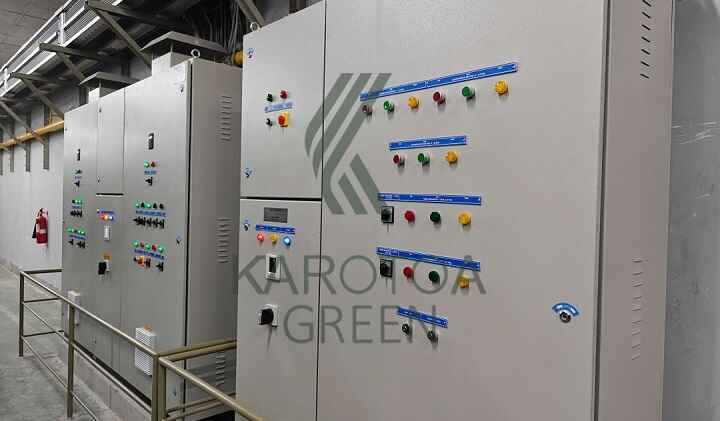
Digital quality control in yarn manufacturing is becoming increasingly important as spinning mills produce thousands of meters of yarn every hour. A thick place in the yarn, a thin spot, an oversized slub, or a stray foreign fiber may seem like a minor imperfection on its own. However, even small defects can quickly become costly production problems, leading to uneven fabric appearance, inconsistent dye uptake, excessive yarn breaks during knitting or weaving, reduced machine efficiency, and ultimately rejected shipments.
Traditional quality control has long relied on laboratory testing and periodic sample inspections. While these methods remain essential for verifying yarn quality, they evaluate only a small percentage of total production. Defects that occur between sampling intervals may therefore remain unnoticed until significant quantities of yarn have already been produced.
Digital quality control in yarn manufacturing changes this approach by monitoring yarn continuously as it moves through the spinning process. Instead of checking only selected samples, modern sensor systems inspect yarn in real time, allowing mills to detect quality deviations immediately and respond before defects spread throughout an entire production lot.
What Inline Yarn Quality Sensors Actually Measure
Modern spinning mills increasingly use inline monitoring systems installed directly on spinning and winding machines. These sensors analyze the yarn continuously without interrupting production, providing operators with immediate feedback whenever quality begins to drift outside acceptable limits.
Evenness Monitoring
Yarn evenness is one of the most important indicators of overall yarn quality. Inline evenness sensors continuously monitor variations in yarn mass or diameter, detecting thick places, thin places, and neps as they occur.
Maintaining consistent yarn evenness improves downstream performance because irregular yarn creates visible fabric defects, inconsistent dye absorption, and higher breakage rates during weaving and knitting. Detecting these variations in real time allows operators to correct machine settings before a minor issue affects an entire production run.
Hairiness Measurement
Hairiness sensors evaluate the number and length of fibers protruding from the yarn surface.
Excessive hairiness can create multiple downstream challenges, including increased lint generation, reduced abrasion resistance, poor weaving efficiency, and inconsistent fabric appearance. Because small differences in hairiness are difficult to detect by visual inspection alone, continuous electronic measurement provides a much more reliable method for monitoring this characteristic.
Foreign Fiber Detection
Contamination remains one of the most expensive quality issues in textile manufacturing.
Modern optical detection systems can identify foreign materials, such as colored fibers, polypropylene contamination, and other unwanted particles, before the yarn reaches knitting or weaving operations. Catching contamination at the spinning stage prevents defects that would otherwise become highly visible after dyeing or finishing, where correction is considerably more expensive.
Tension and Yarn Break Monitoring
Consistent yarn tension is essential for stable spinning performance.
Inline monitoring systems continuously measure yarn tension and detect abnormal break frequencies that may indicate developing mechanical problems. Rather than simply recording yarn breaks, these systems help operators identify recurring issues associated with specific spinning positions or machine components, allowing maintenance teams to investigate before production quality deteriorates further.
Why Continuous Monitoring Is Better Than Sample-Based Inspection
The greatest advantage of digital quality control is not simply the sensors themselves—it’s the timing of the information they provide.
Traditional quality assurance depends on sampling. A technician collects representative samples at scheduled intervals, performs laboratory testing, and assumes the remaining production follows the same quality pattern. While this approach is effective for verifying overall product quality, it cannot identify defects that develop between inspections.
Continuous monitoring removes that blind spot.
Every meter of yarn is evaluated as it is produced. If quality measurements exceed predetermined control limits, the system immediately alerts operators. Depending on the equipment installed, the spinning or winding machine may also activate an automatic yarn clearer that removes the defective section before the package is completed.
Instead of discovering quality problems hours later in the laboratory—or worse, after fabric production has already begun—the production team can investigate and correct the root cause immediately.
Why This Matters Even More for Mélange Yarn
Quality control becomes even more important when producing mélange yarn.
Unlike solid-colored yarns, mélange yarn combines fibers of different colors before spinning. Any variation in blending consistency, drafting performance, or yarn evenness may create visible shade variations in the finished fabric in addition to physical defects.
Because these visual inconsistencies become much more difficult and expensive to correct after knitting and dyeing, early detection during spinning provides a significant advantage. Continuous monitoring helps mills maintain both the physical consistency and visual uniformity expected from premium mélange yarns.
The Technology Behind Digital Yarn Quality Control
Modern quality monitoring combines precision sensors with software that analyzes thousands of measurements per second.
Depending on the application, these systems use capacitive, optical, or electronic sensing technologies to continuously measure yarn characteristics throughout production runs. The software compares each measurement against predefined quality standards and immediately identifies abnormal variations that require operator attention.
One of the industry’s best-known suppliers of yarn testing and quality monitoring equipment is Uster Technologies, whose evenness testers, yarn clearers, and laboratory instruments are widely used throughout the global spinning industry. Other equipment manufacturers offer comparable technologies, but the underlying principle remains the same: establish measurable quality standards, monitor production continuously, and respond quickly to deviations.
Inline monitoring does not replace laboratory testing. Instead, the two systems complement each other. Laboratory testing verifies compliance with customer specifications, while inline sensors provide continuous process control that helps prevent quality issues before they accumulate.
Connecting Quality Data with Predictive Maintenance
One of the most valuable developments in modern spinning mills is the integration of quality monitoring with maintenance planning.
A gradual increase in thick places, yarn breaks, or tension variation on one spinning position often signals a developing mechanical issue rather than a raw material problem. Components such as drafting rollers, bearings, spindle assemblies, aprons, or tension-control mechanisms naturally wear over time, and their condition directly influences yarn quality.
When production quality data is reviewed alongside machine performance, maintenance teams can investigate abnormal trends before equipment failure causes significant downtime or widespread product defects.
Rather than waiting for scheduled maintenance intervals or unexpected breakdowns, mills using integrated monitoring systems can prioritize inspections based on actual production performance. This approach reduces unnecessary maintenance while helping prevent larger quality problems before they develop.
What This Means for Yarn Buyers
For apparel brands, fabric manufacturers, exporters, and sourcing professionals, digital quality control is more than an internal manufacturing process—it directly affects product consistency and supply reliability.
A mill capable of detecting defects during spinning is far less likely to deliver yarn containing hidden quality issues that only become visible during knitting, weaving, dyeing, or garment production. Early defect detection reduces waste throughout the supply chain, improves production efficiency, and minimizes disputes over quality after delivery.
When evaluating a spinning supplier, it is worth asking several practical questions:
- Is yarn quality monitored continuously or primarily through laboratory sampling?
- Which characteristics are measured inline?
- How quickly can operators respond when defects exceed acceptable limits?
- Is quality monitoring integrated with maintenance and production systems to identify root causes?
- What procedures are followed when abnormal quality trends are detected?
The answers often provide a clearer picture of a mill’s operational capability than quality certificates alone.
Digital Quality Control at Karotoa Green
At Karotoa Green, consistent yarn quality begins on the production floor rather than in the laboratory.
Our spinning operations incorporate inline evenness monitoring and foreign fiber detection as part of our overall quality management process. Production teams continuously monitor quality data throughout manufacturing, while routine laboratory testing verifies that finished yarn meets customer specifications.
Quality information is also reviewed alongside equipment performance, allowing our production and maintenance teams to investigate unusual trends before they develop into larger production issues. By combining continuous monitoring with preventive maintenance and standardized testing procedures, we work to deliver yarn with consistent performance across every production lot.
Final Thoughts
Digital quality control has transformed yarn manufacturing from a reactive inspection process into a proactive production system. Instead of relying solely on periodic sampling, modern mills can monitor every meter of yarn as it is produced, identify quality deviations immediately, and correct problems before they affect downstream manufacturing.
For buyers, this means greater confidence in yarn consistency, fewer production interruptions, and a lower risk of costly quality claims. For manufacturers, it means better process control, reduced waste, and improved operational efficiency.
As textile production becomes increasingly data-driven, mills that integrate inline quality monitoring with maintenance and process optimization will be better positioned to deliver the consistency that modern brands and fabric manufacturers increasingly expect.
If you’re sourcing cotton or mélange yarn and would like to learn more about our quality management process, the team at Karotoa Green is always happy to discuss how our manufacturing systems support consistent, reliable yarn production.
