

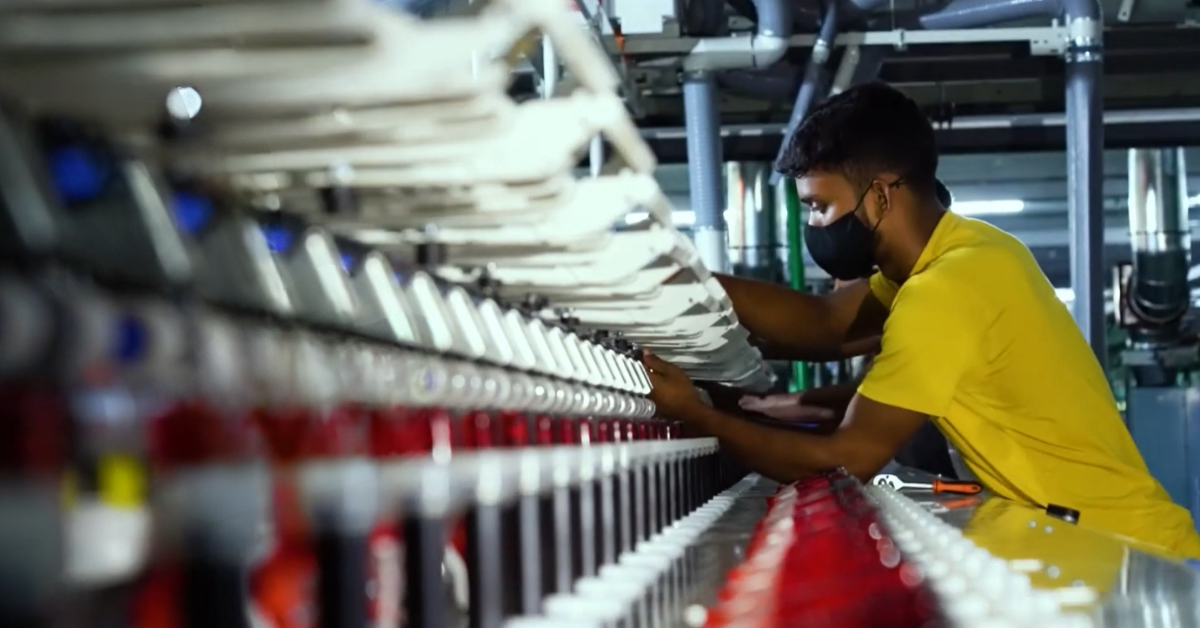
Sourcing high-quality cotton yarn has never been more competitive – or more complicated.
Global demand is rising fast. Apparel brands are rebuilding natural fiber supply chains after years of synthetic-heavy sourcing. Retailers are turning sustainability commitments into mandatory supplier requirements. And the premium knit and activewear categories – two of the fastest-growing segments in global apparel – are pulling demand toward fine-count cotton yarn that most commodity mills cannot consistently produce.
For sourcing teams, that combination creates a specific problem. The number of buyers chasing certified, consistent, fine-count cotton yarn is growing. The number of mills that can actually deliver it – on spec, on time, with the paperwork to back it up – is not growing at the same pace.
This article covers where global cotton yarn demand is concentrating in 2026, why supply consistency beats price as the deciding sourcing factor, what certifications actually mean for market access, and how to separate mills with real quality systems from those with polished supplier profiles.
Quick Overview
- Global demand for high-quality cotton yarn is rising, driven by growth in sustainable apparel, premium knit fabrics, and brand commitments to natural fiber sourcing.
- The global cotton yarn market was valued at $95.4 billion in 2023 and is projected to reach $126.8 billion by 2030, growing at a compound annual growth rate (CAGR) of 4.1% (Grand View Research, 2024).
- Supply consistency – not price – is the primary sourcing challenge buyers report when trying to secure high-quality cotton yarn at volume.
- Bangladesh has become a significant cotton yarn supplier for global buyers, combining competitive pricing with growing mill-level investment in quality systems and sustainability certification.
- Karotoa Green, an eco-friendly spinning mill in Bangladesh, produces high-quality cotton yarn for buyers who need consistent specifications and verified sustainability credentials.
Why Global Demand for High-Quality Cotton Yarn Is Growing Right Now
Demand for high-quality cotton yarn is not growing by accident. Three market shifts are happening at the same time, and together they are putting pressure on sourcing teams to find suppliers who can deliver consistent quality at scale.
First, consumer preference for natural fibers has returned strongly after years of synthetic dominance. A 2024 Cotton Incorporated survey found that 72% of global consumers prefer cotton over synthetic alternatives for everyday apparel – up from 65% in 2020. That preference is pushing apparel brands to rebuild cotton yarn supply chains they had been quietly reducing.
Second, sustainability requirements from major retailers and brands are moving from voluntary to mandatory. H&M, Zara parent Inditex, and PVH Corp have all published supply chain commitments that require suppliers to source natural, traceable, and certified fibers by 2025 or 2026. Cotton yarn that cannot be traced to a certified mill is being disqualified from supplier lists before price negotiations even begin.
Third, the premium knit and activewear segments – two of the fastest-growing categories in global apparel – require fine-count cotton yarn with tight specifications for moisture management and fabric hand. That quality bar is higher than most commodity yarn suppliers can consistently meet.
The Sourcing Challenge: Why High-Quality Cotton Yarn Is Harder to Buy Than It Looks
Finding a cotton yarn supplier is easy. Finding one that delivers consistent quality across multiple production runs, at the count and certification you need, on the timeline your production schedule requires – that is where most sourcing teams run into problems.
The four sourcing challenges that come up most often:
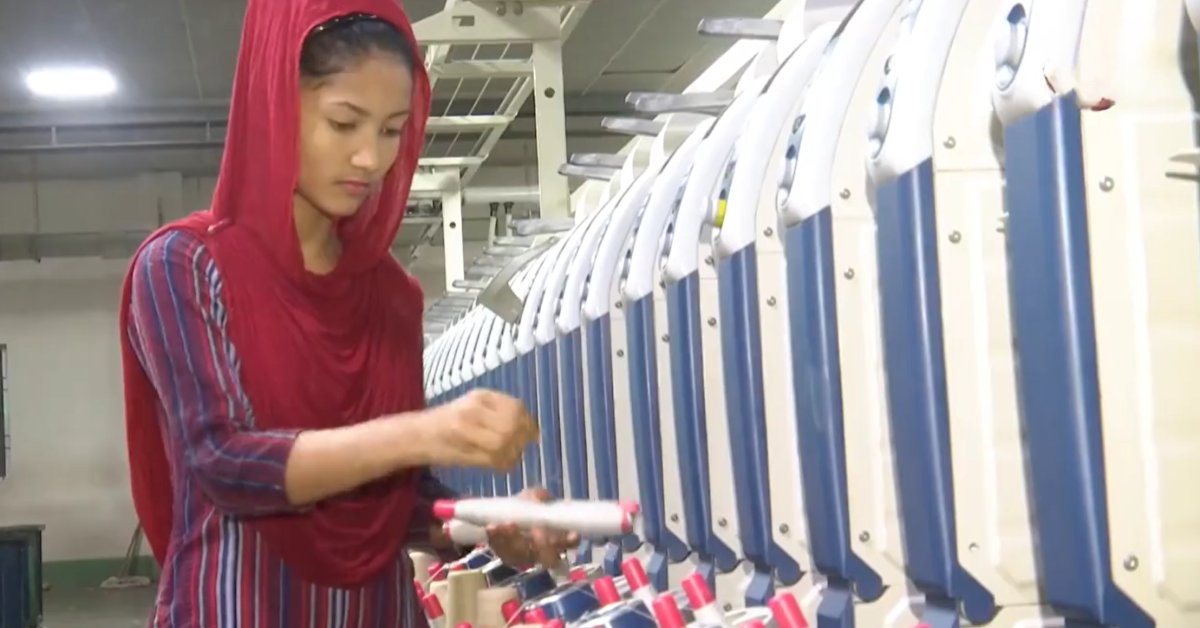
Count Consistency Failures Across Batches
Cotton yarn count – measured in English count (Ne) – determines fabric weight, drape, and dye absorption. When yarn count varies between shipments, fabric produced from two different lots looks and behaves differently after dyeing. For buyers supplying garments to retail chains with strict consistency standards, a single count variation can trigger a rejection of an entire container.
Count consistency is a direct function of how well a mill controls its draw frame settings and how rigorously operators are trained to maintain those settings across shifts and raw material lot changes. Mills without formal process controls produce count variation. Mills with them do not.
Certification Gaps That Block Market Access
The three certifications most commonly required by global buyers in 2025 are GOTS (Global Organic Textile Standard), OEKO-TEX Standard 100, and BCI (Better Cotton Initiative) membership. Many spinning mills in price-competitive markets carry one of these but not all three.
When a buyer’s compliance team requires a specific certification combination and the supplier only holds one, the sourcing relationship stalls – sometimes after months of sample development and price negotiation. Verifying certification status before entering the development process saves significant time.
Lead Time Unpredictability at Volume
High-quality cotton yarn requires longer processing times than commodity yarn because tighter quality controls mean more inspection points and more frequent machine adjustments. Mills that quote lead times based on commodity production schedules routinely deliver late when the actual order requires the care that fine-count or certified yarn demands.
The practical result for buyers is missed production windows, emergency air freight costs, and downstream manufacturing delays. A 2023 McKinsey survey of global apparel sourcing teams found that lead time reliability ranked above price as the most valued supplier attribute for the third consecutive year (McKinsey & Company, 2023).
Sustainability Claims Without Verification
“Eco-friendly” and “sustainable” are terms every spinning mill marketing department now uses. Very few mills can back them up with third-party certification, audited energy and water data, or traceable raw material sourcing.
For buyers whose brand sustainability reports are reviewed by NGOs, investors, and retail partners, sourcing from a mill that claims sustainability without verification creates reputational risk. The gap between marketing language and certified practice is where sourcing decisions go wrong.
Where Global Cotton Yarn Demand Is Concentrated in 2026
Understanding where demand is growing helps sourcing teams prioritize supplier relationships in the right markets.
| End Market | Yarn Specification Demand | Growth Driver |
| Premium knit apparel | Fine count (Ne 30-40), combed, compact | Athleisure and casualwear growth |
| Sustainable fashion | GOTS or BCI certified, ring-spun | Brand sustainability commitments |
| Home textiles | Medium count (Ne 20-30), carded | Post-pandemic home investment |
| Medical textiles | High-count, OEKO-TEX certified | Healthcare sector expansion |
| Denim and workwear | Coarse count (Ne 6-16), open-end | Stable replacement demand |
The fastest-growing segment is premium knit apparel, where demand for combed and compact ring-spun yarn in fine counts is outpacing supply from mills that can consistently hit the specification tolerance buyers require.
Bangladesh as a Cotton Yarn Source: What the Data Shows
Bangladesh is the world’s second-largest garment exporter and has been building its upstream spinning capacity to reduce dependency on yarn imports, which historically came primarily from India, Pakistan, and China.
Bangladesh’s spinning sector now includes over 400 active spinning mills with a combined installed capacity of approximately 12 million spindles (Bangladesh Textile Mills Association, 2024). The sector has seen significant investment in ring spinning and compact spinning technology over the past five years, driven by demand from domestic garment manufacturers and direct export buyers.
For international sourcing teams, Bangladesh offers three specific advantages as a cotton yarn source:
- Competitive pricing relative to Indian and Chinese suppliers for comparable quality specifications, particularly in medium and fine count ring-spun yarn.
- Integrated supply chain proximity – buying yarn from a Bangladesh spinning mill for garments manufactured in Bangladesh eliminates one full logistics step and reduces lead time by two to four weeks versus importing yarn from another country.
- Growing sustainability certification coverage – the number of Bangladesh spinning mills holding GOTS or OEKO-TEX certification has increased by 34% since 2021 (Bangladesh Garment Manufacturers and Exporters Association, 2023).
The sourcing risk in Bangladesh, as in any market, is not the country – it is supplier selection. Quality and certification vary significantly between mills, and price is not a reliable quality signal in a market where cost pressure is high.
What High-Quality Cotton Yarn Certification Actually Means for Buyers
Certifications matter because they transfer accountability. When a mill holds a third-party certification, an independent body has verified that the claims on the mill’s product sheet are accurate. That shifts liability away from the buyer’s sourcing team and onto an auditable paper trail.
Here is what the three most requested certifications actually verify:
GOTS (Global Organic Textile Standard) certifies that the cotton input was grown without synthetic pesticides or fertilizers and that the processing mill meets environmental and social criteria including water treatment, chemical management, and fair labor practices. It covers the full chain of custody from fiber to finished yarn.
OEKO-TEX Standard 100 certifies that the finished yarn has been tested for harmful substances – pesticide residues, heavy metals, formaldehyde, and pH levels – and meets safety thresholds for human skin contact. It does not certify the farming or processing practices, only the product.
BCI (Better Cotton Initiative) certifies that the cotton was sourced from farmers trained in more sustainable farming practices – reduced water use, responsible pesticide application, and soil health. It is a farm-level certification, not a mill-level one, and does not carry the same chain-of-custody rigor as GOTS.
For buyers sourcing into markets with strict import regulations – the EU, UK, and increasingly the US – GOTS and OEKO-TEX Standard 100 together provide the strongest compliance coverage.
How Karotoa Green Addresses the Core Sourcing Problems
Karotoa Green is an eco-friendly spinning mill based in Bangladesh that produces high-quality cotton yarn for international buyers. The mill’s approach addresses the four sourcing challenges directly.
On count consistency, Karotoa Green uses formal process controls at the draw frame and ring frame stages, with operator training tied to quality data rather than onboarding schedules.Count variation is tracked batch by batch, and the data is available to buyers as part of the quality documentation package.
On sustainability verification, Karotoa Green holds third-party certification and operates with documented energy and water use data – not marketing language. Buyers who need to include supplier sustainability data in their own reporting have access to audited figures.
On lead time reliability, production timelines at Karotoa Green are quoted based on the actual specification requirements of the order, not on commodity production assumptions. Fine-count and certified yarn orders are scheduled with the inspection time they require built in from the start.
For sourcing teams looking for a Bangladesh cotton yarn supplier where quality claims are backed by process discipline and certification, Karotoa Green is a direct option to evaluate.
What to Ask a Cotton Yarn Supplier Before Placing an Order
These six questions separate suppliers with genuine quality systems from those with good marketing:
- What is your count tolerance across a production run, and do you have data from recent orders to show it? A specific number – such as plus or minus 1.5% – backed by production data is a real answer. “We maintain tight tolerances” is not.
- Which third-party certifications do you currently hold, and can you provide the certificate numbers for verification? Certificates can be verified directly on the certifying body’s website. Always verify independently.
- What is your standard lead time for this count and specification, and what does it include? Ask what the lead time covers – spinning only, or spinning plus winding, testing, and documentation. The difference is often two weeks.
- How do you handle raw material lot changes mid-order? Cotton fiber properties vary between bales and between harvest seasons. A mill with no protocol for managing this variation will pass that variation into your yarn.
- What is your end breakage rate at winding, and how has it trended over the past year? A mill tracking this number has measurement discipline. A mill that does not track it does not.
- What sustainability data can you provide for our supplier reporting requirements? Ask for specific figures – energy consumption per kilogram of yarn, water use, wastewater treatment method. Vague answers mean the data does not exist.
Frequently Asked Questions About Global Cotton Yarn Demand and Sourcing
What is driving global demand for high-quality cotton yarn in 2026?
Three factors are driving demand: consumer preference returning to natural fibers after years of synthetic growth, mandatory sustainability sourcing requirements from major apparel brands and retailers, and growth in premium knit and activewear categories that require fine-count cotton yarn with tight specifications. All three are pulling in the same direction at the same time.
What is the difference between carded, combed, and compact cotton yarn?
Carded yarn is the standard process – cotton fibers are cleaned and straightened before spinning but shorter fibers remain in the yarn, giving it a softer, slightly hairier texture. Combed yarn goes through an additional step that removes short fibers, producing a smoother, stronger yarn used in premium apparel. Compact yarn uses a modified ring spinning process that bundles fibers more tightly, reducing hairiness and improving strength further – it is the specification most demanded in fine-count premium knit fabrics.
Why is Bangladesh a competitive source for high-quality cotton yarn?
Bangladesh combines competitive pricing with growing mill-level investment in ring spinning technology, quality systems, and sustainability certification. The integrated supply chain – spinning mills and garment factories in the same country – also reduces lead times and logistics costs for buyers sourcing finished garments from Bangladesh.
How do I verify a spinning mill’s sustainability certification?
GOTS certificates can be verified at global-standard.org using the certificate number. OEKO-TEX Standard 100 certificates can be verified at oeko-tex.com. BCI membership can be confirmed through the Better Cotton Initiative’s public member list. Always verify directly on the certifying body’s website rather than accepting a PDF from the supplier.
What count range covers most premium apparel applications?
Fine count ring-spun yarn in the Ne 30-40 range covers the majority of premium knit apparel applications including T-shirts, polos, and lightweight knitwear. Finer counts (Ne 40-60) are used in luxury single-jersey and high-end lingerie. Medium counts (Ne 20-30) cover heavier knitwear, sweatshirts, and home textiles.
Key Takeaways
- Global cotton yarn demand is growing at 4.1% CAGR through 2030, driven by natural fiber preference, brand sustainability mandates, and premium knit category growth.
- The four sourcing challenges buyers face most are count consistency failures, certification gaps, lead time unpredictability, and unverified sustainability claims.
- Bangladesh is a competitive source for high-quality cotton yarn, with integrated supply chain advantages and growing certification coverage across its spinning sector.
- Always verify certifications directly on the certifying body’s website – not from supplier-provided documents alone.
- Karotoa Green in Bangladesh produces certified, high-quality cotton yarn with documented process controls and sustainability data available for buyer reporting requirements.
