

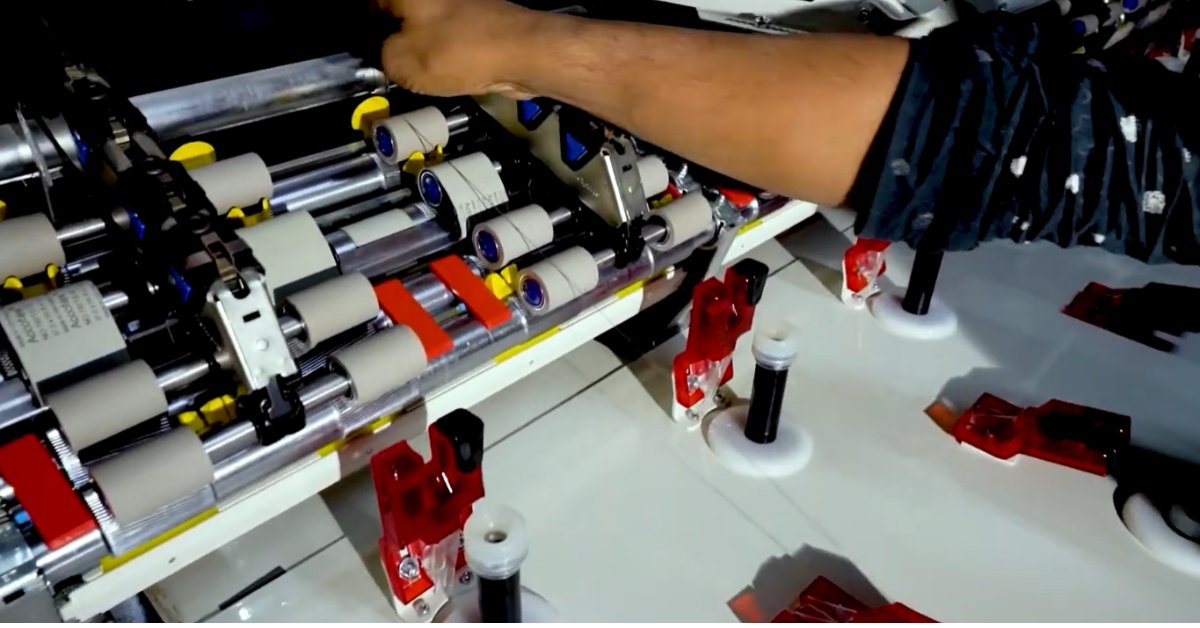
Understanding how training improves yarn quality starts with recognizing that quality rarely depends on machinery alone. In a modern spinning mill, trained operators play an important role in keeping production stable, identifying problems early, and maintaining consistent yarn performance.
When operators lack structured training, small process deviations—such as incorrect tension, drafting ratios, or missed contamination—can develop into defects that affect inspection results, delay shipments, and increase costs. By the time a buyer notices the problem, it may have already passed through several stages of production.
Structured training helps mills prevent these issues by giving workers the knowledge and practical skills needed to monitor equipment, respond to process variations, and maintain quality standards. This makes workforce training an important part of achieving reliable yarn quality and consistent production.
This article explains how effective training can reduce common yarn defects, strengthen production practices, and help buyers identify suppliers that invest in skilled and capable teams.
TL;DR
- Inconsistent yarn quality in spinning mills is most often a people problem, not a machine problem – untrained or undertrained operators introduce the defects that reject shipments and break sourcing timelines.
- Structured operator training directly reduces yarn defects including count variation, uneven twist, and nep formation by giving workers the skills to catch and fix problems at the machine level.
- Mills with formal training programs report 20-35% fewer quality rejections compared to mills that rely on on-the-job observation alone (International Textile Manufacturers Federation, 2023).
- Buyers and sourcing teams should ask suppliers about their training structure before placing orders – it is one of the most reliable predictors of consistent quality across production runs.
- Karotoa Green, an eco-friendly spinning mill in Bangladesh, builds worker training into every stage of its production process as a direct quality control measure.
Why Yarn Quality Problems Start with People, Not Machines
The most common reason yarn fails inspection is not a broken ring frame or a miscalibrated draw frame. It is an operator who was never properly trained to detect the early signs of a problem before it became a defect.
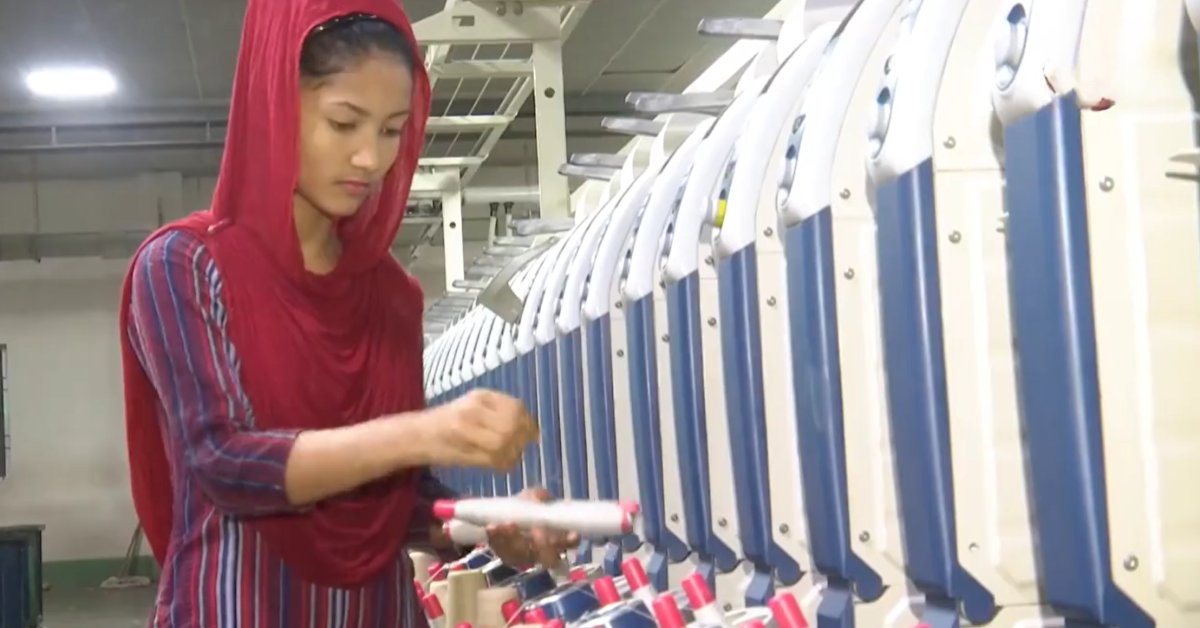
Modern spinning equipment is precise. But that precision depends entirely on the person running it. When an operator does not know how to read tension variance on a roving frame, how to adjust traveler speed under humidity changes, or how to identify nep buildup before it contaminates a full batch – the machine keeps running and the yarn keeps failing.
For sourcing teams, this matters because it is not visible from a factory audit. A mill can have brand-new machinery, clean floors, and ISO certification – and still produce inconsistent yarn if its workforce has not been trained to the standard the equipment requires.
What Poor Training Actually Costs Buyers
Quality rejections are the most obvious cost. But they are not the only one.
When untrained operators produce defective yarn, the damage moves through the supply chain in stages:
- Rejected shipments delay production schedules by two to six weeks while replacement orders are placed and shipped, especially when the sourcing mill is overseas.
- Count variation across batches means fabric dye absorption changes lot to lot. Garments cut from two different yarn batches end up visually mismatched – a problem that only shows up after dyeing, when it is too late to fix cheaply.
- Yarn breakage rates in weaving and knitting operations go up when input yarn has uneven twist or weak joins. Downstream mills absorb that cost through downtime and waste.
- Audit failures at the buyer level cost time and sourcing relationships. If a supplier’s quality record shows repeated defect patterns, most compliance teams flag them for review or disqualification.
The International Labour Organization estimates that low-skill manufacturing operations lose 15-25% of production value to preventable errors (ILO, 2022). In spinning, a large share of those errors trace directly to operator knowledge gaps.
How Structured Training Reduces Yarn Defects: 5 Direct Mechanisms
Training improves yarn quality through five specific pathways. Each one addresses a defect category that buyers regularly encounter in inspections.
1. Count Consistency Through Draw Frame Calibration Training
Yarn count – the thickness of the yarn – must stay within a tight tolerance across an entire production run. Count variation happens when draw frame drafting ratios drift and the operator does not catch it.
Trained operators learn to check drafting zone settings at the start of each shift, after machine stoppages, and when raw material lots change. This single practice accounts for the majority of count variation catches before they reach winding.
2. Twist Uniformity Through Ring Frame Monitoring Skills
Twist per inch (TPI) determines yarn strength and handle. When traveler speed or spindle speed drifts, TPI changes – and the operator is the first line of detection.
Training programs that include hands-on TPI testing teach operators to identify twist irregularity by feel and by sample before a full bobbin is produced. Mills with this training step in place see measurably lower strength variability in finished yarn (Textile Research Journal, 2023).
3. Nep Reduction Through Blow Room and Carding Awareness
Neps – small fiber entanglements that appear as white specks in fabric – form primarily during the blow room and carding stages. They are a direct result of incorrect machine settings, fiber damage from rough handling, or contaminated cotton input.
Operators trained in raw material assessment catch contamination before it enters the line. Operators trained in carding cylinder maintenance catch wire damage that generates neps at the source. Without that training, neps travel through the process invisibly until they appear in finished fabric.
4. End Breakage Control Through Winding and Splicing Training
End breakages during winding add weak joins to the yarn package. Those joins are the points most likely to break during downstream processing in weaving or circular knitting.
Trained winding operators learn proper splicing technique, tension settings by yarn count, and how to identify packages with abnormal breakage rates before they leave the department. This reduces the weak-join defects that cause loom stops and fabric holes at the buyer’s manufacturing stage.
5. Contamination Prevention Through Material Handling Protocols
Foreign fiber contamination – polypropylene, jute, synthetic fragments – is one of the most damaging yarn defects for buyers because it is irreversible. Once contamination reaches yarn, it cannot be removed without destroying the package.
Training workers in material handling protocols – how cotton bales are opened, staged, and fed – prevents the majority of contamination events. This is procedural knowledge that machines cannot enforce on their own.
The Training Structure That Actually Works in Spinning Mills
Not all training delivers results. One-time orientation sessions and informal peer instruction do not build the consistent knowledge that quality requires. The training structure that produces measurable quality improvement has four components:
| Component | What It Covers | Frequency |
| Initial skills certification | Machine operation, quality checks, safety | Before independent line work |
| Defect recognition training | Visual and tactile identification of all major defect types | Quarterly refresher |
| Process parameter training | Reading and adjusting machine settings by yarn count and fiber type | When count or fiber changes |
| Quality feedback loop | Review of rejection data with the team that produced it | Monthly |
The feedback loop component is the one most mills skip. When operators never see the inspection results tied to their production, they have no way to connect their actions to the defects downstream buyers are finding. Closing that loop is what turns training from a compliance activity into a quality improvement system.
What Buyers and Sourcing Teams Should Ask Suppliers About Training
Before placing an order with a spinning mill, these five questions give you a fast read on whether their quality is built on trained people or on luck:
- Do you have a formal onboarding program for new spinning operators, or do new workers learn by watching experienced ones? Mills that rely entirely on peer observation carry higher defect risk because knowledge gaps transfer along with the knowledge.
- How do you train operators when you switch to a new yarn count or fiber type? Count and fiber changes are the highest-risk points for quality drift. A clear answer here signals process discipline.
- Do your operators have access to the inspection results for their production output? If operators never see rejection data, the feedback loop is broken and defects repeat.
- What is your end breakage rate at winding, and how has it changed over the past 12 months? A mill tracking this number has a quality measurement culture. A mill that does not know the answer does not.
- How do you handle contamination prevention in the blow room? The specific answer matters less than whether they have a documented answer at all.
How Karotoa Green Builds Training Into Quality Control
Karotoa Green is an eco-friendly spinning mill based in Bangladesh. The mill treats worker training as a quality control function, not a human resources function – meaning training decisions are driven by defect data, not by onboarding schedules.
Operators at Karotoa Green go through count-specific process training each time production shifts to a new specification. Defect review sessions connect inspection outcomes directly to the department and shift that produced them. The result is a workforce that understands what it is producing and why consistency in their work determines whether a buyer’s downstream production runs on schedule.
For sourcing teams looking for a Bangladesh spinning supplier where quality is built into the process rather than inspected at the end, Karotoa Green’s training-centered approach is worth evaluating.
Common Mistakes Spinning Mills Make with Operator Training
These four mistakes show up across mills that have chronic quality complaints from buyers:
- Training once at hire, then never again. Yarn specifications change. Machines wear. New fiber lots behave differently. Training that stops at onboarding becomes outdated within a production season.
- Training only machine operation, not quality recognition. An operator who knows how to run a ring frame but cannot identify a twist defect is half-trained. Quality recognition skills are as important as operating skills.
- No documentation of training completion. If training records do not exist, there is no way to identify which operators are undertrained when a defect cluster appears. Documentation is what makes training auditable and correctable.
- Separating training from quality data. Training programs that run independently of quality inspection results do not improve over time. The mills that reduce defect rates consistently are the ones that use rejection data to drive what training covers next.
Frequently Asked Questions About Training and Yarn Quality in Spinning Mills
How does operator training directly improve yarn quality?
Trained operators catch process deviations – tension drift, count variation, contamination – before they produce defective yarn. Untrained operators run the machine as instructed but lack the knowledge to recognize when something is going wrong. That gap between instruction and judgment is where most yarn defects originate.
What types of yarn defects are most directly caused by poor operator training?
The defects most linked to training gaps are count variation, twist irregularity, nep contamination, weak splices from improper winding technique, and foreign fiber contamination from incorrect material handling. All five are preventable with structured skills training at the relevant machine stage.
How can a buyer tell if a spinning mill has strong operator training?
Ask the mill for their end breakage rate trend, how they train operators on new count specifications, and whether operators receive feedback on inspection results from their production. Mills with strong training programs can answer all three questions with specific data. Mills without them cannot.
Does better training mean higher yarn prices from the supplier?
Not necessarily. Mills that reduce defect rates through training lower their production waste and rework costs, which offsets a portion of the training investment. In many cases, mills with lower defect rates are more competitively priced over a full sourcing relationship than mills with lower unit prices but high rejection rates.
How often should spinning mill operators be retrained?
Operators should receive refresher training at minimum quarterly for defect recognition, and specifically when the mill switches yarn count, fiber type, or raw material supplier. Relying on annual training cycles in a production environment where conditions change monthly is not sufficient for consistent quality.
Is Bangladesh a reliable source for quality yarn from trained mills?
Bangladesh has significant spinning capacity and a growing number of mills that have invested in structured workforce training alongside equipment upgrades. Quality varies by mill, not by country. The sourcing question is always whether the specific mill has a training system that produces consistent results – not whether the country does.
Key Takeaways
- Inconsistent yarn quality is more often a training problem than a machinery problem – operators are the variable that equipment cannot control.
- The five defect categories most reduced by training are count variation, twist irregularity, nep formation, weak splices, and contamination.
- Buyers should ask specific training questions before placing orders – end breakage rate trends, count-change training protocols, and feedback loop practices are the clearest quality signals.
- Mills that connect training programs to live defect data improve faster than mills that treat training as a one-time compliance step.
- Karotoa Green in Bangladesh integrates worker training directly into its quality control process, making it a sourcing option for buyers who need consistency across production runs.
