

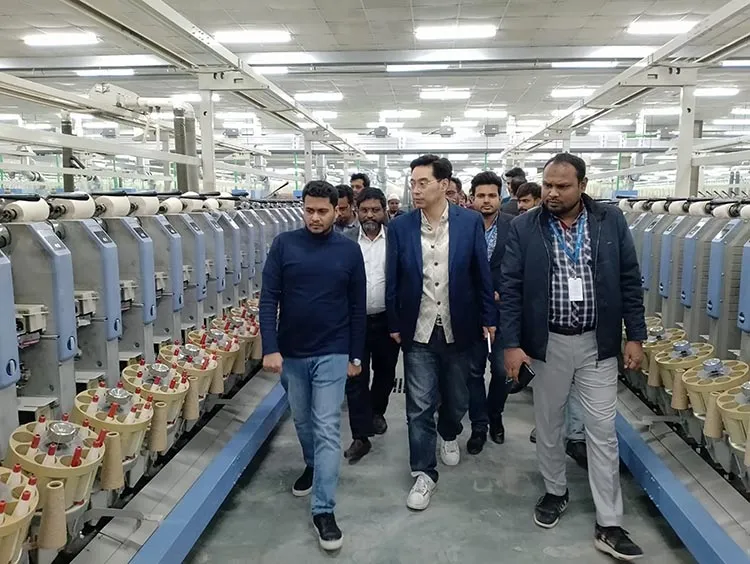
Bangladesh has become one of the world’s leading textile sourcing destinations, supplying yarn and fabrics to garment manufacturers worldwide. While the country is best known for its ready-made garment industry, its spinning sector also produces a wide range of cotton, polyester, blended, and melange yarns for knitwear and woven applications.
However, successful yarn sourcing involves more than comparing prices. Supplier reliability, consistent quality, payment terms, and production planning can all affect whether an order runs smoothly or leads to costly problems.
If you’re wondering how to buy yarn from Bangladesh, the process starts with understanding your requirements and finding suppliers that can meet them. This guide covers the key steps, from defining technical specifications and checking suppliers to requesting samples and preparing for an order.
Key Takeaways
- Bangladesh offers a broad range of cotton, blended, polyester, and melange yarns for apparel manufacturing.
- Clear technical specifications improve quotation accuracy and supplier selection.
- Supplier verification should include certification checks, reference reviews, and an assessment of quality systems.
- Independent testing and pre-shipment inspections can reduce sourcing risks.
- Long-term sourcing success depends on balancing price, quality, lead time, and supplier reliability.
Understanding the Bangladesh Yarn Market
Bangladesh’s spinning industry plays a critical role in supporting the country’s export-oriented garment sector. Local mills supply yarn to domestic manufacturers and serve international buyers seeking competitive sourcing options.
The market is particularly strong in:
- Cotton yarn for knitwear applications,
- Polyester yarn is used in various apparel categories,
- Cotton-polyester and cotton-viscose blends,
- Melange yarns are commonly used in T-shirts, sweatshirts, and casual wear.
Some mills also manufacture specialty yarns, although capabilities can vary considerably. Buyers sourcing technical products or higher yarn counts should verify production experience before proceeding.
An established supply chain is one of Bangladesh’s advantages. However, not every mill offers the same level of quality assurance, laboratory capability, or export expertise. For this reason, supplier selection should be approached as a due diligence exercise rather than a price comparison exercise.
Before contacting suppliers, buyers should clearly define their requirements. Doing so improves communication, facilitates meaningful comparisons of quotations, and reduces the likelihood of misunderstandings later in the sourcing process.
Step 1: Define Your Yarn Specifications Before Contacting Suppliers
One of the most common sourcing mistakes is requesting quotations without providing sufficient technical detail. Suppliers can only offer accurate pricing, lead times, and development recommendations when they fully understand the buyer’s requirements.
A well-structured specification sheet should include:
| Specification | Example |
| Fiber composition | 100% cotton / 65% polyester, 35% cotton |
| Yarn count | Ne 30s, Ne 40s |
| Ply | Single / 2-ply |
| Twist direction | S-twist or Z-twist |
| End use | Weft knitting / Warp weaving |
| Required certifications | OEKO-TEX®, GOTS, GRS |
| Estimated annual volume | Metric tons per year |
| Target shipment schedule | Monthly / Quarterly |
| Destination market | EU, USA, Middle East |
Providing this information early allows suppliers to assess whether they have the technical capability and production capacity to support your program.
Additional Specifications for Melange Yarn
Melange yarn developments require additional detail because appearance consistency is a critical quality factor.
When requesting quotations or samples for melange yarn, consider including:
| Melange Specification | Example |
| Melange type | Grey / Anthra / Custom |
| Grey percentage | 10% grey, 90% white |
| Base fiber | 100% cotton / Cotton-polyester blend |
| Color tolerance | Delta E limits between lots |
| Intended fabric construction | Single jersey / Fleece / Interlock |
Defining these requirements before development begins reduces the risk of future disagreements regarding shade consistency and product performance.
Practical Advice
Use the same specification format when contacting multiple suppliers. Standardized inquiries make it easier to compare quotations fairly and identify suppliers who genuinely meet your technical requirements rather than those who simply offer the lowest price.
Step 2: Identify and Verify Potential Suppliers
Selecting the right supplier is one of the most important decisions in the yarn sourcing process. A supplier with strong quality systems and reliable delivery performance can become a long-term sourcing partner, whereas the wrong choice can lead to delays, inconsistent quality, and increased operational costs.
Where to Find Yarn Suppliers
International buyers typically identify suppliers through one or more of the following channels:
1. Industry Associations
Trade associations and industry directories can serve as useful starting points when building a supplier shortlist. These resources often include company profiles, product categories, and manufacturing locations.
However, directory listings should only be viewed as an introduction. Independent verification remains essential.
2. B2B Sourcing Platforms
Online sourcing platforms allow buyers to compare suppliers, review product offerings, and initiate discussions with potential partners.
These platforms can help buyers:
- Build an initial supplier database,
- Identify mills specializing in specific yarn categories,
- Compare product capabilities.
Always validate supplier claims before moving to the sampling stage.
3. Local Sourcing Representatives
Buyers without an established presence in Bangladesh may choose to work with local sourcing professionals who can assist with:
- Supplier identification,
- Factory visits,
- Sample coordination,
- Production follow-up,
- Shipment monitoring.
Although this approach adds cost, it can reduce risk during initial sourcing programs.
How to Verify a Supplier
Before requesting samples, conduct a structured supplier assessment.
Review Export Experience
Understanding a supplier’s export background provides insight into their ability to meet international buyer requirements.
Consider asking:
- Which markets do they currently serve?
- What types of customers do they typically support?
- What is their experience with similar yarn specifications?
Suppliers familiar with export procedures are often better prepared to manage documentation and compliance requirements.
Verify Certifications
If your business requires certified products, request supporting documentation and verify certification status independently.
Examples include:
- OEKO-TEX® Standard 100,
- GOTS (Global Organic Textile Standard),
- GRS (Global Recycled Standard).
Certification claims should never be accepted without confirmation from the issuing body.
Evaluate Quality Systems
Reliable suppliers typically have established procedures for maintaining consistency.
Questions worth asking include:
- Is there an in-house testing laboratory?
- What quality checks are conducted during production?
- How are production records maintained?
- How are non-conforming products handled?
Strong quality management practices often contribute to better repeat performance.
Request References
Feedback from existing customers can provide valuable insights that quotations alone cannot reveal.
Where appropriate, ask about:
- Delivery reliability,
- Communication effectiveness,
- Responsiveness to issues,
- Consistency across repeat orders.
Additional Considerations for Melange Yarn Suppliers
Melange yarn production introduces additional technical complexity.
Buyers may wish to discuss:
- Whether fiber blending is managed internally,
- How shade consistency is monitored,
- Whether shade approval submissions are provided before bulk production,
- How repeat orders are controlled to maintain appearance standards.
The ability to reproduce successful developments consistently is particularly important for long-running garment programs.
Practical Advice
Price should be one consideration among many.
A supplier offering slightly higher pricing but demonstrating stronger technical capability, transparent communication, and dependable delivery performance may ultimately provide better value than the lowest bidder.
Step 3: Request and Evaluate Yarn Samples
Once potential suppliers have been shortlisted, the next step is to assess whether their products meet your technical and commercial expectations.
Sampling should be conducted systematically rather than relying solely on visual inspection.
What to Include in a Sample Request
Provide suppliers with the same specification sheet used during the quotation stage.
Clearly communicate:
- Yarn count requirements,
- Fiber composition,
- Intended end use,
- Required certifications,
- Quantity of sample required,
- Supporting documentation expectations.
Consistent sample requests make supplier comparisons more meaningful.
Evaluate Technical Performance
Where possible, assess samples against recognized testing standards or internally established benchmarks.
Common evaluation criteria include:
| Parameter | Reference Standard |
| Count accuracy | ASTM D1907 |
| Tensile strength | ASTM D2256 |
| Twist level | ASTM D1422 |
| Moisture content | ASTM D2495 |
| Evenness | Uster Statistics |
The relative importance of each parameter will depend on the intended application.
For example:
- Knitting applications may prioritize appearance and evenness,
- Weaving applications may place greater emphasis on tensile performance.
Consider Independent Testing
Independent testing can provide additional confidence, particularly when working with new suppliers or placing higher-value orders.
Third-party laboratories may help buyers:
- Validate supplier claims,
- Confirm specification compliance,
- Reduce the likelihood of future disputes.
Although independent testing incurs additional costs, it may be a worthwhile investment during supplier selection.
Evaluating Melange Yarn Samples
Melange yarn requires additional assessment because appearance consistency is a defining characteristic of the product.
Approving the yarn itself is often not enough.
Assess Shade Consistency
Review samples from multiple cones under standardized lighting conditions.
The objective is to identify:
- Visible shade variation,
- Uneven fiber distribution,
- Inconsistent melange effects.
Small inconsistencies observed during sampling may become more pronounced during bulk production.
Request Knit-Down Samples
Melange characteristics are often easier to evaluate once the yarn has been converted into fabric.
Requesting a knitted swatch representative of the intended application allows buyers to assess:
- Overall appearance,
- Shade distribution,
- Visual consistency,
- Suitability for the final garment category.
Approving both the yarn and the knit-down sample can help reduce the risk of appearance-related issues later in production.
Evaluate Repeatability
Long-term programs require more than successful initial samples.
Discuss with suppliers how they manage:
- Blend control,
- Production documentation,
- Shade approval systems,
- Lot identification practices.
Repeatability is particularly important for replenishment programs where products remain in the market across multiple seasons.
Practical Advice
Avoid approving suppliers solely because they provide the lowest-priced sample.
A balanced evaluation should consider:
- Technical capability,
- Product consistency,
- Communication quality,
- Transparency in testing,
- Overall commercial competitiveness.
Selecting suppliers based on total performance rather than price alone often results in more stable sourcing relationships and fewer disruptions over time.
Step 4: Negotiate Price, MOQ, and Lead Time
Once technical requirements have been approved, attention should shift to commercial terms. While price is often the primary focus, factors such as minimum order quantities (MOQs), lead times, and payment conditions can have an equally significant impact on sourcing outcomes.
Understand What Influences Yarn Pricing
Yarn prices are affected by several variables, including:
- Raw material costs,
- Fiber composition,
- Yarn count,
- Production complexity,
- Order volume,
- Market conditions.
Specialized products, such as melange yarns, may command a premium because of the additional processes required to maintain appearance consistency.
Rather than evaluating quotations based solely on unit price, buyers should consider the overall value offered by each supplier, including quality performance, reliability, and technical support.
Clarify Minimum Order Quantities
MOQ requirements vary by supplier and product category.
Factors that commonly influence MOQs include:
- Standard versus custom developments,
- Production batch sizes,
- Fiber availability,
- Shade complexity for melange products.
Understanding MOQ expectations early helps buyers align sourcing decisions with production requirements and inventory planning.
Confirm Lead Times Realistically
Production schedules should be discussed before finalizing an order.
Topics worth clarifying include:
- Sample approval timelines,
- Manufacturing duration,
- Capacity availability,
- Shipment preparation requirements.
Buyers should also account for external factors such as public holidays, peak production periods, and logistics disruptions that may affect delivery schedules.
Document Commercial Agreements
Before production begins, ensure that all commercial terms are confirmed in writing.
These should include:
- Product specifications,
- Quantity commitments,
- Pricing arrangements,
- Price validity periods,
- Delivery schedules,
- Payment terms,
- Inspection requirements.
Clear documentation helps minimize misunderstandings and supports smoother execution.
Step 5: Manage Payment, Inspection, and Shipment
After commercial terms have been agreed and samples approved, the order can move into production.
At this stage, attention to detail becomes increasingly important.
Typical Order Process
Although procedures may vary between suppliers, most orders follow a similar sequence:
- Final specifications are confirmed.
- The supplier issues a pro forma invoice.
- The buyer approves the commercial terms.
- Payment arrangements are established.
- Production planning begins.
- Quality inspections are scheduled.
- Shipment documents are prepared and released.
Maintaining visibility throughout each stage helps buyers manage risk more effectively.
Payment Considerations
Two payment methods are commonly used in international yarn transactions.
Letter of Credit (LC)
A Letter of Credit provides a structured payment mechanism involving both the buyer’s and supplier’s banks.
Potential benefits include:
- Enhanced security,
- Clearly defined documentation requirements,
- Reduced payment uncertainty.
Many buyers prefer LC arrangements when working with new suppliers or larger order values.
Telegraphic Transfer (TT)
TT arrangements are also widely used.
Depending on the supplier relationship, payment structures may involve:
- Partial payment before production,
- Final payment before shipment or against agreed documentation.
When dealing with unfamiliar suppliers, buyers should approach TT arrangements cautiously.
Review Shipping Documentation Carefully
Documentation errors can result in customs delays and unexpected costs.
Common shipment documents include:
- Commercial Invoice,
- Packing List,
- Bill of Lading,
- Certificate of Origin,
- Inspection reports,
- Relevant certification documents.
Reviewing documentation before cargo arrival can help identify discrepancies early.
Arrange Independent Quality Inspections
Pre-shipment inspections can provide additional assurance, particularly during first orders.
Inspections may include:
- Visual checks for packaging integrity,
- Verification of labeling accuracy,
- Confirmation of shipment quantities,
- Random quality assessments based on agreed criteria.
For melange yarn, buyers may also wish to confirm that lot segregation procedures are followed to reduce the risk of appearance variation within finished products.
Common Risks Buyers Should Prepare For
Even well-planned sourcing programs involve some uncertainty.
Recognizing potential risks in advance can help buyers develop more effective mitigation strategies.
Raw Material Price Volatility
Changes in cotton and synthetic fiber markets may affect yarn pricing.
Possible responses include:
- Negotiating price validity periods,
- Improving demand forecasting,
- Reducing delays between quotation and order placement.
Production Capacity Constraints
Suppliers operating near full capacity may face scheduling challenges.
Buyers should discuss:
- Current production commitments,
- Capacity planning practices,
- Contingency arrangements during peak periods.
Logistics Disruptions
Transportation delays can affect production timelines and customer commitments.
Building reasonable flexibility into delivery schedules can help reduce the impact of unforeseen events.
Quality Disputes
Many disputes arise because expectations were not clearly documented.
To minimize risk:
- Retain approved reference samples,
- Define acceptance criteria in advance,
- Document specifications thoroughly,
- Use independent testing when appropriate.
While risks cannot be eliminated entirely, proactive planning often leads to more predictable sourcing outcomes.
Final Thoughts
Bangladesh offers garment buyers access to a diverse and well-established yarn manufacturing base capable of supporting a wide range of apparel applications. However, successful sourcing depends on more than identifying a competitive supplier.
Clear technical specifications, structured supplier evaluation, disciplined quality control, and effective risk management all contribute to long-term sourcing success. Buyers who invest time in preparation and due diligence are generally better positioned to build reliable supply relationships and reduce costly disruptions.
Whether sourcing standard cotton counts or specialized melange developments, the principles remain the same: prioritize transparency, verify capabilities, and make decisions based on overall value rather than price alone.
In an increasingly complex sourcing environment, consistency, communication, and trust often prove just as important as commercial competitiveness.
