

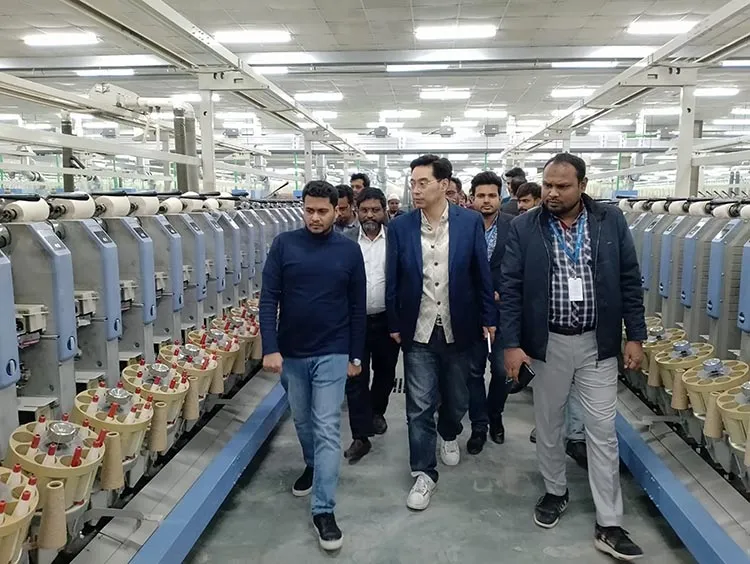
Skilled workforce development is becoming increasingly important in Bangladesh’s spinning sector. While machines are essential to modern textile production, skilled people are the ones who operate, maintain, and improve these systems.
This is especially important in spinning, where raw fibers are transformed into yarn—the foundation of fabrics used worldwide. When yarn quality is inconsistent, it can affect every stage that follows.
That’s why skilled workers are vital. Their knowledge and experience help maintain quality and keep production running smoothly. As Bangladesh continues to strengthen its position as a textile hub, investing in skills across spinning mills is more important than ever.
Why the Spinning Sector Matters
The spinning sector sits at the start of the textile value chain and plays a key role in ensuring quality across all subsequent stages.
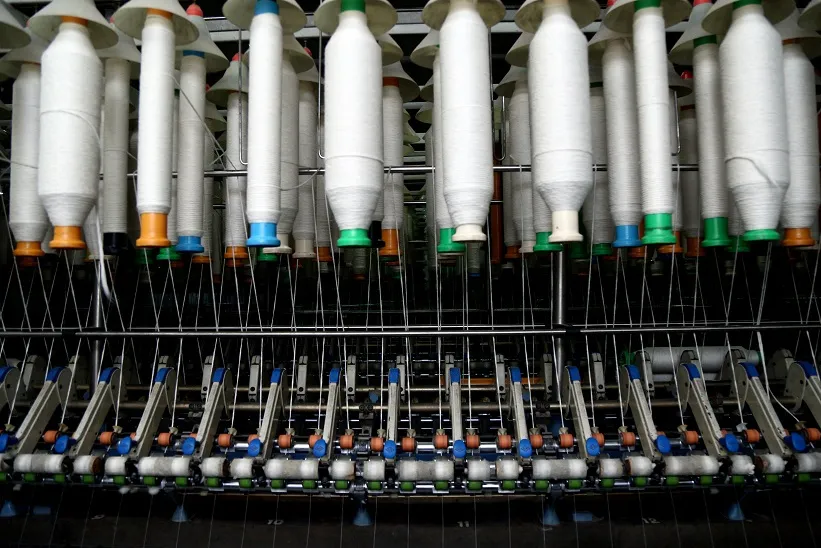
It connects:
- Raw materials such as cotton and polyester
- Fabric production processes like knitting and weaving
- Final garment manufacturing
Because of this, even small spinning issues—such as uneven or weak yarn—can lead to bigger problems later. Fabric defects, inefficiencies, and inconsistencies often start here.
That’s why spinning mills rely heavily on skilled teams, including:
- Machine operators who manage daily production
- Quality control teams that ensure consistency
- Technical staff responsible for maintenance and performance
Simply, better skills produce better yarn—and better yarn means better products.
The Changing Nature of Work in Spinning Mills
Traditionally, spinning mills relied on manual labor. Workers ran machines directly, adjusted settings, and used experience to solve problems.
The requirements of the spinning sector are undergoing a significant transformation.
Modern spinning mills now use:
- Automated systems to control production
- Digital monitoring tools for real-time insights
- Advanced machinery for precision and efficiency
As a result, worker roles change. Rather than repeating tasks, they now focus on managing and optimizing production.
Today’s workforce is expected to:
- Monitor machine performance and system outputs.
- Analyze production data to identify issues.
- Handle technical adjustments and fine-tuning.
This shift demands higher skill levels, continuous training, and a strong understanding of new technologies.
Why Skilled Workforce Development Is Critical
A skilled workforce is now essential to succeed in today’s textile industry. As production advances, trained, knowledgeable workers grow ever more important. The process helps maintain consistent yarn strength and evenness.
Higher Machine Efficiency
With proper handling and monitoring, machines run more smoothly, reducing downtime and improving overall productivity.
Reduced Waste
Better control over production leads to fewer defects, less reprocessing, and lower material loss.
Meeting Global Standards. Better production control causes fewer defects, less reprocessing, and lower material loss. These standards are consistently met.
Key Skills Needed in Modern Spinning Mills
As technology evolves, spinning mills require a workforce with technical knowledge, hands-on experience, and the ability to use modern systems.
Machine Operation Skills
Workers need a clear understanding of how to operate key equipment, including:
- Ring spinning machines
- Compact spinning systems
Maintenance Skills
Basic technical knowledge is important for:
- Troubleshooting common issues
- Preventing machine breakdowns through regular checks
Quality Control Skills
To maintain consistent yarn standards, workers should be able to:
- Check yarn consistency and uniformity.
- Identify defects. To keep yarn standards up, workers should: in the factory, workers are also expected to:
- Monitor digital dashboards and system outputs.
- Understand machine data and performance indicators.
- Respond quickly to automated alerts and notifications.
Training to understand machine data and performance.made significant progress in textile education and workforce training over the years. As the industry evolves, the focus on developing skilled professionals has become stronger and more structured.
Organizations such as the Bangladesh Textile Mills Association and the National Institute of Textile Engineering and Research play an important role in supporting this development.
They contribute by promoting:
- Technical training programs for industry-ready skills
- Collaboration between academic institutions and textile mills
- Ongoing skill development initiatives for the workforce
These efforts are helping prepare workers for the demands of modern textile operations, where both technical knowledge and practical expertise are essential.
Challenges in Workforce Development
Despite progress, workforce development faces challenges as technology and production advance.
Some of the key challenges include:
- Skill gaps: Many workers still lack the advanced technical training required for modern spinning systems
- High turnover: Frequent job changes make it difficult to build and retain long-term expertise
- Limited training facilities: Not all mills have access to structured training programs or resources
- Technology adaptation: Rapid changes in machinery require continuous learning and upskilling
Addressing these challenges by investing in training will strengthen productivity and sustainability.
The Role of Spinning Mills in Skill Development
Training cannot depend solely on institutions. Spinning mills themselves play a crucial role in developing and strengthening. Training can’t rely only on institutions. Spinning mills have a crucial role in developing workforce skills. continuous learning.
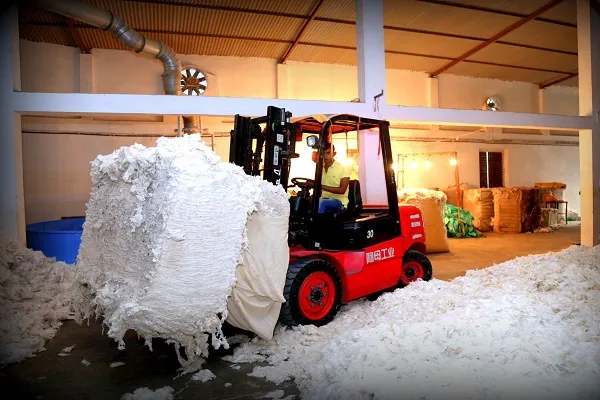
This includes:
- On-the-job training programs that build practical experience
- Continuous skill development to keep pace with new technologies
- Creating a safe and supportive work environment
- Encouraging learning, growth, and knowledge sharing
In many modern spinning mills, training is no longer viewed as an extra cost. Instead, it is seen as a long-term investment. In modern spinning mills, training isn’t viewed as an extra cost but as a long-term investment in productivity, quality, and performance. It is investing not just in technology, but also in people.
One example is Karotoa Green Spinning Mills Ltd, where modern machinery is paired with a well-trained workforce to maintain consistent yarn quality and efficient production.
By focusing on both technology and skill development, companies like this are able to:
- Maintain high production standards across operations.
- Reduce operational issues and downtime.
- Build long-term reliability with consistent output.
This kind of balanced approach is becoming increasingly important as the industry moves toward more advanced, quality-driven manufacturing. are clearly visible at every stage of production. Skilled teams help ensure that operations run smoothly, efficiently, and with greater consistency.
The key benefits include:
- Better yarn quality and more consistent output
- Higher production efficiency with fewer interruptions
- Lower waste and improved cost control
- Stronger relationships with global buyers through reliable performance
In a competitive textile market, these advantages can make a significant difference. They not only improve day-to-day operations, but in a competitive market, these benefits set mills apart. They improve daily operations and build long-term trust in global supply chains through technology and human capability. As automation and smart systems become more common, the role of the workforce will continue to evolve.
Key factors influencing this shift include:
- Automation and smart manufacturing systems
- Data-driven decision-making across production
- Continuous skill development to keep pace with change
As a result, workers will need to adapt to:
- New technologies and digital tools
- Changing roles within the production process
- Greater technical responsibilities and problem-solving tasks
This shift highlights the importance of ongoing learning. Continuous training is essential for relevance and competitiveness.
Conclusion
The spinning sector remains the backbone of textile manufacturing—and at the center of it all is the workforce.
While the spinning sector is the backbone of textile manufacturing, the workforce is at its core. the process. Their expertise is what keeps production stable and products dependable.
To remain competitive in the global market, Bangladesh must invest in workforce development by strengthening skills, improving training, and adopting modern technology.
By building capable teams and supporting continuous learning, the spinning sector can move toward a more resilient and sustainable future. Ultimately, the industry depends on its people. such as cotton, into yarn, which is used to make fabric and garments.
FAQs
Why is skilled labor important in spinning mills?
Skilled workers ensure better yarn quality, reduce machine downtime, and improve overall production efficiency.
How is automation changing spinning jobs?
Automation reduces manual work and increases the need for technical and monitoring skills.
How can Bangladesh improve the skills of its textile workforce?
Through training programs, industry collaboration, and continuous skill development initiatives.
